Home > Fused's Random Articles: Isolation and Solitude in Nintendo Franchises
Welcome to my series of articles, which, unlike Pocodudeface's weekly articles, I will do randomly and very sporadically. Very VERY sporadically, as my schedule varies quite a bit and I never know when I can just sit down and write for an extended period of time. But you're probably wondering what my first article is all about? Hm? Well I'll tell you what it is, a feature of certain Nintendo games that I, personally, love, but certain people do not, a feeling that makes you feel alone, a feeling that sends shivers down your spine. Yes ladies and gentlemen, I am most certainly talking about isolation, the feeling that you are alone, stranded, and that the only person you can rely on is yourself. This feeling defines certain series, such as Metroid, and is strewn throughout other series, such as Zelda, but either way, Nintendo has been sure to implement it in a way that only compliments the more social and optimistic aspects of their respective games. Hit the jump to read on!
Let's first find out what the term “isolation†means. In terms of sociology, isolation is defined as “a lack of contact between persons, groups, or whole species.†In terms of psychology, it is defined as “the failure of an individual to maintain contact with others or genuine communication where interaction with others persists.†These definitions do not fully express what I mean by “isolation†though, so we will move to a synonym, solitude. Solitude means “The state of being alone or remote from othersâ€. This definition perfectly fits its meaning in video games, thus when I am referring to isolation, imagine the definition of solitude, as opposed to the actual definition of isolation. But, now that we know what isolation means, how is it implemented into the video games we know and love?
Let's start with the game that, aside from certain horror franchises, defines the feeling of isolation. Yes I'm talking about Metroid. In the first Metroid, you are simply left with a basic description of your mission, and you are dropped off in a terrifying, 8-bit world. You could go right, but then you would find yourself unable to press on. You need to go left first in order to pick up the morph ball upgrade, but did anybody tell you this? Did any guide walk you through your first moments on the planet Zebes? No, you were left to your own thoughts, and will be consistently through the entire game. Of course, this was back in the 1980's. Story development was a side dish compared to the entree that was the game play and difficulty back then. No, not even in the 16-bit era of the SNES and Super Metroid did Metroid truly evolve to be the game series we know it as today. I believe our feeling of separation from humanity was truly pioneered in two games: Metroid Fusion and Metroid Prime.
Let's start with the first, Metroid Fusion. Unlike Metroid Prime, Metroid Fusion is very story-based, and is more like a horror game then any other Metroid. You are weak, defenseless on a space station floating lifelessly through an asteroid field while being chased around by a zombie created out of your previous suit. You are left alone, with everything chasing you and taking attempts at your life. The only contact you have with other life is with a computer, a computer programmed to follow orders from corrupt officials and politicians. Who wouldn't feel, well, isolated? Entire segments of this game are spent hiding from your suit, sometimes even just cowering in a corner thinking “Please don't find me please don't find me†because if it does, you know you're toast. You can handle monsters, you can handle anything this station can throw at you, but the one thing you're cautioned to avoid is the one thing chasing you. You run, you investigate, you gain in power, all preparing for the time when you can fight the X parasites in your suit, and when it's finally time, it is thrust upon you without warning. Safe to say, certain parts of this game scared the living hell out of me.
Now, let's move to the console game released at the same time as Metroid Fusion: Metroid Prime. In Metroid Prime, you are given one simple task, a task not given by human words but a task given to you by the intro sequence of the game. You stumble upon a ship, seemingly abandoned, filled with the corpses of Space Pirates, humans, and creatures being transported to an unknown destination. The music in this segment is enough to send chills down your spine. You, in the process of exploring the ship in the hope of finding a clue to the untimely demise of the crew, stumble upon a huge creature. This is the parasite queen, and upon killing her, the ship begins falling apart. You escape while being under attack by your arch-nemesis, Ridley. He flies down to the planet below, and you follow. Your goal: find him.
You have not, nor will you at any point in this game, meet a human soul. This defines isolation in its rawest form. Talon IV is yours to explore, by yourself, all alone. And that, my friends, is why the Metroid series as a whole cannot top this game. Metroid Prime 2 places you in a war with you on one side, Metroid Prime 3 has your actions dictated by a computer (Much like Metroid Fusion), and Metroid Other M has you communing with soldiers every thirty seconds. Metroid has not had purer isolation since these days, and I doubt it ever will.
Metroid Prime is a piece of art, because the creators knew how to properly utilize the element of isolation to tamper with the security of the human mind. My first time going through that game, I was on edge every second of it, not because it was scary, but because I was a victim of a lack of security, Aka. A victim of isolation. This is the brilliance that Nintendo needs to look at for inspiration, if they don't, I fear we may see another repeat of Metroid: Other M. It wasn't bad, but it could have been so much better.
Let's back away from the subject of Metroid, though, before the entire article is consumed by it. Let's talk about another of Nintendo's biggest series, Zelda. Zelda is not so much completely based around the concept of isolation, rather, Zelda has used isolation in controlled doses, to make some sequences creepy and others controlled and safe.
Let's use The Legend of Zelda: The Wind Waker as an example of “controlled dosesâ€. Most of this game is a cakewalk, you could play this game blindfolded it is so undeniably easy. However, just because it is easy, doesn't mean it can also use isolation to mess with you. I'm thinking of one dungeon in particular, the Earth Temple. The earth temple is dark, bleak, and there is no one there other then you and your bird-girlfriend, and she doesn't talk much, especially when being kidnapped at various points in the dungeon by sentient purple hands. This, the music, the redeads, and other ghosts, make this a temple not to be desired in today's housing market. This place feels creepy, you cannot deny, and that is why isolation works so well.
Even when your boat is waiting right outside that door, and you have a person with you, your isolation from them puts you on edge. Other temples, such as the shadow temple in Ocarina of Time, the ancient cistern (basement) in Skyward Sword, and the Arbiter's Grounds in Twilight Princess, are perfect examples of what Nintendo could use in the future to make us thoroughly creeped out and on edge. These are just examples of the ways this sort of atmosphere could be implemented more and more in order to improve the feel of the respective Zelda game quite a bit.
This feel in certain dungeons defines one Zelda game among all others, The Legend of Zelda: Majora's Mask. Although you are surrounded by people, it's no wonder that you, Link, feel isolated. In this alternate world, Link knows nobody, and will not foster a relationship with any of them unlike in Ocarina of Time, in which everyone knows and loves Link. In Majora's Mask, you are caught up in the middle of a panic over the moon (SPOILERS), and when you do finally stop it and the mask is returned to the Happy Mask Salesman, you are dismissed by the fairies to go your own way and continue down the path you saw at the beginning of the game. Such little things in this game such as the Anju and Kafei side quest, and the Lon Lon Ranch side quests contribute to the atmosphere of solitude and isolation from the communities in Termina. You're alone in the world, and your goal is to save the world. It's part of isolation that makes Majora's Mask so undeniably creepy sometimes, another brilliant example of it being used to improve the atmosphere of the game.
Isolation is used in the controlled doses mentioned above to make certain Nintendo games (ex. Pikmin) more panicked, and more atmospheric. I think you get my point now, though, that being that a lot of games could benefit from looking at games such as Metroid Prime and Majora's Mask and implementing some of the techniques in order to make their games that much more riveting. For some reason, though, Nintendo has not implemented this in some time and this is why the next Metroid and Zelda games should, in my opinion, focus around it. Atmosphere is an extremely important part of the game, and one aspect that, sadly, seems to have been neglected as of late. I could go on and on about this topic, but I want to keep this rather short, as this is my first article here on the site. So what are your opinions? Tell us in the comments!
About the Author:
Rial Johnson
Rial Johnson founded Nintendo Castle in 2011 with hopes to build the largest collection of Nintendo walkthroughs, guides, and content on the web. He is an avid gamer with a special place in his heart for Nintendo, but often finds himself writing about games more than actually playing them. You'll likely see him around Nintendo Castle and on social media, mostly managing the front-end content of the site.


 Nintendo Castle turns 15 today. Happy Birthday? Anniversary? Whatever you want to call it, NC has ...
 Nintendo surprised us this morning by revealing a rather large update for Animal Crossing: New Hor...
 A brand new entry in the Fire Emblem series is coming to Switch 2. It's called Fire Emblem: Fotrun...
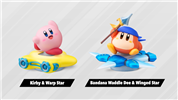 Kirby Air Riders is getting a new line of amiibo. It starts with Kirby & Warp Star and Waddle ...
 In a move that no one expected (or thought was a good idea), Nintendo has decided to try their han...